
CHIPSEC Firmware Validation
How CHIPSEC fits into firmware security validation for BIOS write protection, SMM protections, SPI configuration, and Secure Boot checks.
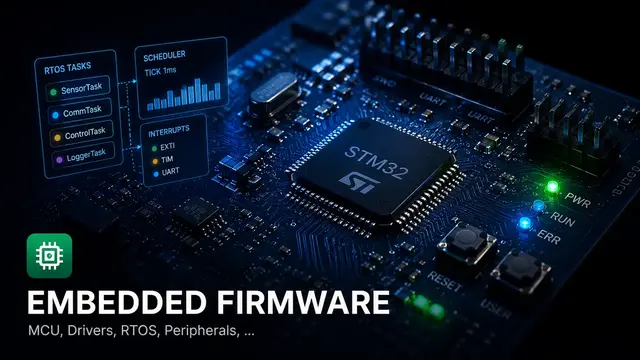
Some firmware bugs do not look like bugs during normal boot.
The system boots. The OS loads. The device works.
But BIOS write protection is off, SMM is not locked, or Secure Boot policy is misconfigured. That is where security validation tools matter.
Common checks
chipsec_main
chipsec_main -m common.bios_wp
chipsec_main -m common.spi_lock
chipsec_main -m common.smm
Module names and support depend on platform and CHIPSEC version, so always verify against the tool version used in your validation environment.
What CHIPSEC can help validate
| Item | Value | Note |
|---|---|---|
| BIOS write protection | SPI / BIOS region protection | Checks whether flash writes are properly restricted. |
| SPI locks | Descriptor and controller configuration | Useful for ensuring flash controller policy is locked after boot. |
| SMM protections | SMRAM and SMM lock state | Checks whether SMM memory and related protections are configured. |
| Secure Boot | Boot policy state | Useful as one signal among PK/KEK/db/dbx and firmware variable checks. |
| Platform registers | Security-related chipset state | Helps compare expected lock bits with actual runtime state. |
Real world example: BIOS lock regression
A BIOS update changes initialization order. The platform still boots, but a lock bit is no longer set.
A security validation flow:
Run CHIPSEC on good BIOS
Run CHIPSEC on bad BIOS
Compare failed modules
Map failed register to chipset documentation
Find firmware phase responsible for lock
Check whether EndOfDxe / ReadyToLock path changed
This connects Phase 05 SMM knowledge with practical validation.
Related notes
Found this useful?
Save it or share it with someone learning firmware, BIOS/UEFI, and embedded systems.
Nội dung liên quan
Một số bài viết, ghi chú hoặc project có liên quan đến nội dung bạn vừa đọc.
Secure Boot Investigation Playbook
A firmware engineer playbook for Secure Boot failures involving PK, KEK, db, dbx, SetupMode, signatures, and EFI_SECURITY_VIOLATION.
dmpstore Deep Dive
How to use UEFI Shell dmpstore to inspect boot variables, Secure Boot variables, setup variables, and NVRAM state during firmware debug.
What is UEFI Variable?
Quick note explaining UEFI Variable for BIOS/UEFI and embedded firmware readers.
Biến note thành bài viết hoàn chỉnh
Notes là nơi ghi nhanh khái niệm.