
What is BIOS Region?
Quick note explaining BIOS Region for BIOS/UEFI and embedded firmware readers.
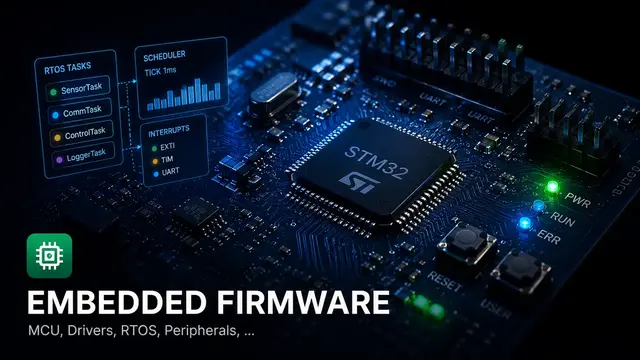
The BIOS region is the SPI flash region that stores the BIOS/UEFI firmware image.
Why it matters
- Explains how firmware is packaged into ROM/flash images.
- Helps debug missing modules, wrong FV placement, and section layout problems.
- Connects build output with what actually runs on the board.
Practical example
Example: a DXE driver may compile successfully but never run if it was not placed into the correct Firmware Volume.
Quick checklist
Quick takeaway
BIOS Region helps connect build output with the final ROM image layout.
Put it into the system flow
I try not to treat BIOS Region as a dictionary entry. I read it as part of a firmware path: who produces it, who consumes it, and what symptom appears when it is wrong. That habit makes the note useful during debugging, not only during study.
A practical picture
For firmware image topics, I picture a nested container: firmware volume, file, section, dependency, and entry point. If BIOS Region is wrong, the failure may show up during dispatch, flash layout validation, or driver discovery rather than at the exact definition site.
In a real debugging session
For BIOS Region, I usually ask four questions: which firmware phase sees it, which module produces it, which module consumes it, and where the symptom appears when it is wrong. That turns a BIOS/UEFI definition into a useful debug checkpoint.
When a DXE driver does not bind or BDS stops at an unexpected point, avoid staring at one error line only. Walk backward through protocols, handles, device paths, variables, and policy decisions. Firmware failures are usually chained.
Related notes
- What is TE Image?
- What is SPI Flash in BIOS?
- What is PE32 Section?
- What is Flash Descriptor?
- What is FFS Section?
Public references
Found this useful?
Save it or share it with someone learning firmware, BIOS/UEFI, and embedded systems.
Biến note thành bài viết hoàn chỉnh
Notes là nơi ghi nhanh khái niệm.