
What is Power Sequence?
Quick note explaining Power Sequence for BIOS/UEFI and embedded firmware readers.
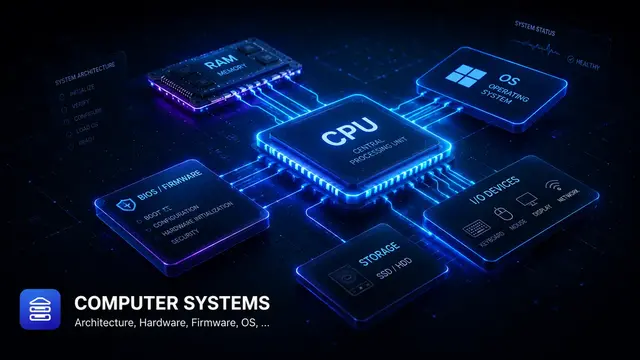
What is Power Sequence?
Power sequence is the required order of enabling power rails, clocks, reset signals, and ready checks for board hardware.
Why it matters
- Describes how firmware exposes hardware behavior to the OS.
- Helps connect schematic-level signals with OS-visible devices.
- Useful for debugging boot, power, and device-enumeration issues.
Practical example
Example: when a device is visible in firmware but not in the OS, compare ACPI namespace output, OS logs, and the resources returned by _CRS.
Quick checklist
- Which phase is the last confirmed point in the log?
- Is there enough context around the failure?
- Can UEFI Shell output confirm the same state?
Quick takeaway
Power Sequence is the contract between firmware description and OS interpretation.
Related notes
- ACPI Table Types: key points
- What is ACPI Namespace?
- What is AML?
- What is ACPI Method?
- What is GPIO in platform firmware?
Public references
Found this useful?
Save it or share it with someone learning firmware, BIOS/UEFI, and embedded systems.
Nội dung liên quan
Một số bài viết, ghi chú hoặc project có liên quan đến nội dung bạn vừa đọc.
What is GPIO in platform firmware?
Quick note explaining GPIO in platform firmware for BIOS/UEFI and embedded firmware readers.
What is SMBIOS Type 0–4?
Quick note explaining SMBIOS Type 0–4 for BIOS/UEFI and embedded firmware readers.
What is EC & BIOS Handshake?
Quick note explaining EC & BIOS Handshake for BIOS/UEFI and embedded firmware readers.
Biến note thành bài viết hoàn chỉnh
Notes là nơi ghi nhanh khái niệm.